Summary
Sometimes an inner conflict is not about preferences, careers, or relationships, but about survival itself. In this episode, we hear the story of a woman facing a life-threatening cancer diagnosis. She finds herself torn between two radically different paths: evidence-based medical treatment, or alternative therapies. But this is not a simple choice — there are many other elements which add to her inner conflict.
Content note: This episode contains discussion of life-threatening cancer and death so you may wish to consider where and when you listen.
Transcript
Susan (0:02): Sometimes an inner conflict means making a choice between life and death. How did Talia choose the direction that could mean she lived or died? Have you ever felt torn experience that inner struggle of clashing, needs, yearnings and belief, not a fight with others, a fight within yourself. It's confusing, it's painful, it's inner conflict.
Caitlin (0:34): I'm Caitlin,
Susan (0:35): I'm Susan,
James (0:35): I'm James. We're coaches with different areas of expertise and a shared passion for helping everyone understand and navigate torn feelings. Welcome to the torn podcast where we share stories, resources and hope around all things inner conflict. This episode dives into a real life story of inner conflict. From our research interviews. To maintain confidentiality, we've removed identifying details, and the story is narrated by an actor.
Caitlin (1:15): A quick warning that this is a deeply emotional story involving life threatening cancer. So you may wish to consider where and when you listen.
Talia (1:31): I had a breast cancer diagnosis. At first, things seemed simple, but then it turned out, there were more aggressive and invasive cancers. By the time, they knew that the treatment I faced was going to be a very challenging journey.
Susan (1:53): When Talia was diagnosed with advanced cancer, she urgently needed to decide which direction her treatment should take the traditional medical direction or an alternative? There were compelling reasons for either choice, including whether she wanted to survive or not.
Talia (2:15): The doctors offered me a double mastectomy,
Talia (2:18): followed by chemotherapy, radiotherapy and immunotherapy. The journey ahead of that just seemed terrifying. I was completely torn about whether to say yes or or try the alternative route.
Susan (2:39): So what I'm feeling and thinking is health issues come to us all, but the impact when we know that these health issues are serious, and all the mastectomy, the chemotherapy, the radiotherapy, the immunotherapy, all the treatments laid out for us and we don't know what to do. I'm wondering how you Caitlin and you James are reacting to Talia is very, very strong statement.
Caitlin (3:10): I just get that heart sink feeling. You know when, when you get a diagnosis like this, it must just be complete and utter overwhelm,
Susan (3:23): shock, and you know,
Caitlin (3:26): where do you even begin? It's like your your whole frame of of thinking, of being, of your world, of what you do and who you are, might be crumbling as you hear that.
James (3:39): It is that tearing back of the curtain, isn't it? It's a switch in your life is never the same again. Having that we could all be carrying something around with us, but we don't know. And then the minute we get the diagnosis, everything changes forever. I think that must be really, really hard,
Susan (4:06): and I'm realizing that it's really hard, not only for the person, for us, for Talia, but for those around us. It's a stone thrown into the water and the ripples are going out. And one of the things that I know we'll discover as we listen to talia's story is the impact on other people and the impact on her of other people's reactions. So let's hear a little more of talia's story,
Talia (4:41): just as we were coming out of covid, I had problems in my breast, and it turned out to be cancer, and I had a few operations and something that just still wasn't right. So I got a second opinion. I had further testing. I. And they found more frightening cancers, which then led to a change in the treatment they were suggesting. For me, it became clear that I was heading for mastectomy, but now also chemotherapy and radiotherapy and immunotherapy. Was just facing a very difficult journey, and I had just very little time to work out what I wanted to do.
Susan (5:32): What I'm hearing here, and I've heard it myself in my own clients, if they come to me with a sudden shock, particularly around health, or indeed around a relationship, is a kind of bereavement journey. You know, there's often denial, first denial, and then fear completely takes over and grief, you know, grief for a life that you said James is changed forever, but fear of, will life change or will life end? It's a very, very primitive response, and as Talia said, the mind stops. What can she do with that?
Caitlin (6:18): I think it's so challenging, because when that fear response takes over, that's our kind of primitive brain right, launching us into a fight, flight, freeze type of response, just trying to deal with a threat that seems imminent and you lose track of that prefrontal cortex, that higher level brain that helps you regulate emotions and bring some rationality online. Yeah.
James (6:55): Another pressure that adds to that, I think, is the urgency that once doctors have diagnosed, they want to act straight away, so come on, let's go. This is the plan, and to find space for yourself. To say is that my plan? Can I get a second a third opinion? Can I talk to the people who love me and know me precisely at the moment that you are feeling that primitive fear response that is really hard and debilitating. I think
Susan (7:33): one of the things that we we've certainly found in our research around in a conflict, is that however much the mind, the monkey mind, is rushing around, the first thing to do is to calm and it's so hard. It's so hard when you're faced with this sort of real drama in your life. So yes, as you say, James, talking to other people, looking after yourself, finding as much information as you can, of course, and that is possible with health, but it is the entire unknowable, but looking after yourself first, I think
Caitlin (8:18): I love what You're pointing to there. Susan, like, what is your emergency emotional regulation toolkit, right? And one of the frameworks that you taught me, which could be helpful is, think, feel, act and interact, right? How can you turn on your brain and get information your thinking mind, feel. How can you move with and through the emotions act? What can you do in your body to begin to allow emotions to move through you? Can you walk stretch? Do you have different bodily activities that help you and interact. How can you get support through others?
Susan (9:07): And so often that the feel part of that takes over and everything else stops. And certainly myself, I don't know whether either of you have shared this, there's a sort of false courage. You know, no, I can cope with this, and you don't like self to feel, and then you're cutting off, as you've just pointed out, Kaitlin, a quarter of your resources. So when faced with taking this sort of life changing or even life limiting direction, to make sure you do all four of those. So let's hear more from Talia.
Talia (9:49): And there's a there's a backstory here. The previous year, my husband Mark died. Suddenly, he was an incredibly steady and kind and wise human being, very much into alternative medicine and alternative therapies both of us had seen a naturopath for ages, and then he died, and I went into shock and grief, and I didn't through that. When I was diagnosed with cancer.
James (10:43): Isn't that horrendous? Horrendous? The double whammy,
Susan (10:49): yeah, the double whammy of losing somebody and then almost losing yourself, just recovering so soon afterwards and later. We're going to deal in more detail with how Mark's death influenced Talia, but to have both happening together,
Caitlin (11:14): what do you think is helpful for somebody to lean on in such a place of absolute crisis?
Susan (11:21): I'm getting a picture of somebody with their feet on the ground and the whole of the rest of their body sort of buffeted in the wind. And while I get that picture, I also get a picture of people gathering around so that however far they lean, they're not going to fall. People are so important in a situation like that, and although there are no there's no way to say that Talia isn't suffering here. I'm really, really hoping that she had people around her to look after her, and that those people were able to stay when Mark's death turned to her own possible death,
James (12:10): yeah, and we need the right people, and we need to be able to Say this is the kind of support I need, because these are extremely emotive things, and everyone will have an opinion and want to help by expressing their opinion, and sometimes that comes Across as support, and sometimes it adds more pressure. So as much as there's support, there needs to be space within that support to say, I want support this way. Just be with me. Don't tell me what to do or hold it lightly or whatever,
Caitlin (13:01): and that's a burden on her right like that's a that's an additional thing that she's got to probably struggle to articulate. But one thing we could offer to supporters who are listening is as a first step when somebody's reality seems to be crumbling, rather than offering advice and direction in the first instance, how can you just affirm their reality? Affirm the truth of who they are and the challenge of what they're going through? As a first step, this is real. You are real. We know you. We are here for you. You know we will listen and be by your side through this process. Susan, I'd love to hear your your take on that first step of a supporter.
Susan (13:57): Yes, because we are, we as torn project are hoping to help not just those who are torn, but those who are supporting the torn. Totally agree with what both of you said, and I think it's difficult, because obviously anybody who is ready and willing and eager to support is also suffering their own inner struggle here, you know, how do I best support and what do I do with my own grief and fear around the person who is ill? So let's move on to hearing a little bit more about Talia 's inner struggles. I mean, you know, from the outside it may seem obvious, he's frightened. Where's the where's the inner conflict here, let's hear what it actually is.
Talia (14:56): I get the diagnosis, and. I get told what the treatments are going to be, and it is just such, just a massive deal. So I then I get in touch with a naturopath that Mark and I used to see, and I say, I've got cancer. Can you help? Or do you know someone who can help? And she says that her husband used to have, used to have cancer, and was treated with light therapy by, yeah, an alternative therapist in Germany, and that for him, it's worked. And she points me to someone who does that same therapy, but in the UK. So I had a few sessions of it to see what it was like. But that is when, that's when the real conflict started. You know, Should I, should I carry on on the medical route or go down the alternative route? And I was, I was absolutely torn.
Caitlin (16:06): So now she has a sense of there being at least two possible directions, and that inner conflict heightens,
Susan (16:18): yes, and she has the pull to, should I do it, Mark's way, or should I do it the way that presumably all her doctors are telling her to take and, yeah, she was absolutely torn. And my guess is that those around her are as well. I like what?
Caitlin (16:41): How you say that? Should I do it Mark's way? And that immediately makes me think of the inclination in grief to be closer to the person that you've lost somehow. What are the ways that I can get closer to mark?
Susan (16:57): Maybe this is one, and it's going to also be there the grief of her loss, the loss of Mark added to her own grief, the possible loss of herself. I think that's one thing that does happen when your body's health is vulnerable, that your own sense of self can be vulnerable too. And what do you decide? What do you do? Who do you please in this situation? Do you please yourself? To go with your own instincts. What are your own instincts? It's very, very troubling time.
James (17:37): Yes, and some of the medical treatment sounds incredibly intrusive
Susan (17:47): to the body.
James (17:50): Some of it comes across as deep and long, lasting attacks on the body in order to get rid of the cancer, and thereafter, the body may recover. That's a very, very difficult prospect to head towards.
Caitlin (18:15): Yeah, and in all of this, I'm I'm hearing her action and her desire to get information and opinions and stories and to try something out. You know, I see a lot of courage in moving something forward in this little segment.
Susan (18:37): I think once the fear has well resolved, well diminished, to the point where one can't think. One can move from only feeling to thinking. We've certainly found through the research that the next step needs to be finding the knowledge, finding the information, maybe reading round, maybe talking to other people who've had that experience, and, of course, remembering that nobody's experience is the same. So you can learn from others. But that may not be right for you looking inside yourself. And my guess is that at this point, Tyler was looking inside herself and finding mark. Mark's voice will still be clear in her mind, Mark's wishes, Mark's beliefs, Mark's values, we forefront, and how is she relating to that and relating to what she feels is right for her at this point, she probably is very unclear. Even after gathering information and gathering information, she's probably very unclear about what is right for her. So. So Talia next looks at well, alternative or traditional medicine, and she goes little further into finding out what she should do, what she wants to do, and what she needs to do.
Talia (20:22): At the back of my mind, I kept thinking of the medical treatments that I was being offered, and that the thought of just like have have less done to your body, I just felt I didn't want the treatments I didn't, I didn't want this done, you know, I want, I want my body to be intact, yeah, and strong. And I was, I was very tempted by the treatment that the naturopath had advised. But it was, it was so expensive, and I just couldn't afford it. I remember reading a news story about an actress. She'd been diagnosed with the same breast cancer that I had, and she's kind of just locked herself away and done all sorts of alternative therapies, and just rather than have chemo, and I was so envious of her, she, you know, she's got all this wealth and the contacts to just go and do that. And I didn't, I was just so, so envious of her. And there was this other huge thing that part of me felt that I needed to go for alternative treatments, because otherwise I would be dishonoring mark not going down the alternative route felt just wrong. Somehow. I really wished I had mark there to advise me.
Susan (22:11): I'm really hearing talia's need for, if you like, a guide in this and there's probably one end of the extreme, the need for a guide, and at the other end of the extreme, a need for not quite so many guides, because everybody is probably telling her what they would have done in the in the same situation, I'm also hearing mixed in with this, this wonderful human but why can't I have what other people have? Why can't this be sorted for me, like it is with this actress who's got all the money, this wonderful, very human envy coming through?
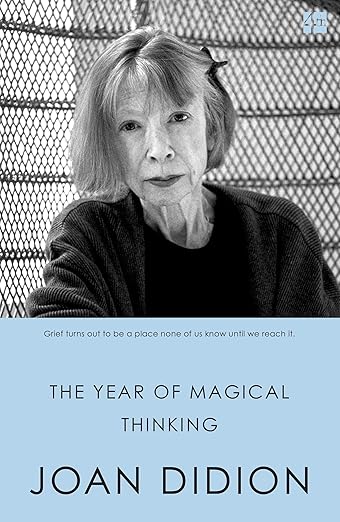
Caitlin (22:58): You know, there's a book about the end of life called The Year of Magical Thinking. I think it's Joan Didion, and this phrase, magical thinking pops to mind here, right? There's a desire to have the crystal ball and be able to look into the future the magical thinking. What if Mark could just be here and guide me. What would he say? You know, and I'm sure that in moments like this, we are sort of thrust into our imaginations. What if I could? What if I knew? What if I had the resources of this person? How could this be different?
James (23:38): I think the piece about the memory of Mark, or dishonoring Mark, I find that really interesting. I hear how difficult it is, and yet Mark has been introduced to us as a very steady and wise companion. So I am absolutely sure that he would say to her, Do what's right for you, without question. Put yourself first. And there's part of this where I hear her trying to do what's right by Mark. And I think that is very complex, and it's it's a sign that the natural grief process is incomplete and this shit has come at the wrong time. Please. Could I just deal with one thing at a time? But it does make everything much more complex, not to have the person in front of you, but to be attempting a dialog with your memory
Susan (24:51): of them. Oh, I love that dialog with your memory.
Caitlin (24:56): Yes. And how many of us in this kind of situation are having that? That kind of experience with our mother, our father, wise Grandma, you know, so interesting. Where are the places we go in our imaginations?
Susan (25:14): And I think one of the things that, well, I'm just remembering now is that we are focused on talia's life and death struggle, but the need for a guide, and the looking back into the past, and that the searching for an answer that's true of every single inner conflict, even the one where you're trying to decide you know what to wear today or which restaurant to go to you're looking for somebody to tell you the answer. And it's such a natural need. There's something else for me, which which comes up around the feelings of envy that Talia has, and that may seem like a distraction. I think it's not. I think all sorts of emotions can come through in the midst of an inner conflict. It's not just about, you know, the fear or the sadness or even the anger. There will be other feelings that come through that you may be thinking, oh, you know, I shouldn't be feeling like this. If you're feeling it, you should be feeling it always, and the importance of feeling what we're feeling as part of the process of working through inner conflict. So Talia has looked at the alternatives and realized that although she feels that mark would want her to go that way, or would he she can't afford them. So now she's going to look at the medical treatment. Let's see what she learned and what she felt about those
Talia (27:12): when it came to the medical treatment routes, I felt there was evidence the doctors deal with this day in, day out. Science informs them that this is the way to save my life. So one in two people have cancer in the UK, and what my doctors were suggesting is just the most normal way of dealing with cancer, that it's the most known way, tried and trusted, so alternative medicine, it will always be my preference, but traditional medicine has the evidence, so I just did not know which way to turn
Unknown Speaker (27:53): fact versus feeling.
James (27:57): The question of evidence is a really tricky and really important. Many of us have a desire for alternative medicine to be effective, but we just don't see the same quality of evidence, and that's really, really hard, and all of that doesn't help her. She's got to find a way to make a decision which is going on, what emotions, logic, hunches, conversations with her deceased partner.
Caitlin (28:30): Yeah, she's in the thick of the confusion, I think, and there's so much information circulating in her dialog, imagined dialog, as you put it right. And so, in a way, when we think about the process of people coming through inner conflict, we're in this moment of of waiting for the tipping point to arrive. We're waiting for some piece of information to somehow land her in in a more decisive place, in a place of clarity and confidence with what she's going to do going forward.
Susan (29:10): Such an important point that about the the tipping point if we realize what we have to do when a situation presents itself, we're just not going to be torn. You know, by definition, the fact that we're torn means that we haven't reached the tipping point. We're still balancing out two or more possibilities, two or more directions, two or more, you know, our gut instinct, fighting our logic, but in most inner conflicts, certainly the ones that are triggered by an event, triggered by a change, there is at some point, at some time, a tipping point. Where you go, Oh, okay, the balance, the balance of the scales, means I need to do this and, and you may change your mind. You know, we have lots of interviews in our research where people have made a decision and then gone, ah, no, okay, and gone back to before the tipping point, but the tipping point is always there, or it's on its way, and we need to remember that.
James (30:28): I think that's a really challenging thing with this particular story, is that with so many other contexts, you can make a decision and take a step forward and then reevaluate and say, No, that's not right. I'll step back and start again, or I'll move slightly differently from here, in a different direction. But with this story, you're all in right? When you make that decision. You're either turning your back on evidence based modern medicine, or you're all into mastectomy, radiotherapy, chemotherapy, and you can't pull out a moment later and say, Actually, I've changed my mind. I'll take the other route. I felt for me, that's one of the things that makes this such a difficult story.
Susan (31:27): Yeah, I'm coming back to something Talia said. She said, alternative medicine will always be my preference, but traditional medicine has the evidence, and it's, as you said, emotion versus logic, instinct versus the facts. But one thing she's doing which gives me hope, even at this stage in the story, that she's going to find a way through, is that she's identified what the possible directions are. It doesn't make it any easier for her, but she's clear about what she's dealing with. So let's hear more.
Talia (32:13): Was so conflicted. I just struggled so much with it, and I tried to do what felt right for me. I was getting two medical opinions, and on some decisions, I said yes immediately, but on others, I checked with both the consultants, and then if I got different opinions, I had to make my own choices, and what made it worse was that I didn't have any capacity in my mind to work this through. I didn't feel I had the ability to do the research, and I was feeling hugely vulnerable, and that didn't help.
Caitlin (33:08): I hear two two pieces here, like it's amazing to me that she's saying. I'm getting these double opinions. I'm trying to make my own decisions when I had the opportunity, I'll go back and check with both consultants, and yet she still feels like she isn't able to make good decisions, like her capacity of mind is not there, but I'm hearing clearly that it is improving somehow in this part of the story, that there is some processing going on, mentally, rationally, logically. What do you guys make of this section?
James (33:49): Well, I agree. Clearly, she is doing more and more and doing admirably, and yet the feeling that she's doing all that in is the one that says, I don't have capacity. I can't do this alone, and I'm vulnerable. I don't have any help. And it's it's interesting to sit here from our point of view, and say, See that she's doing an amazing job of getting informed, of getting multiple opinions, doing as much research as she can. She's doing incredibly
Susan (34:34): It's very moving. And listening to her process of flipping between following her instincts, doubting her instincts, leaning on others, and some sense that she doesn't be leaning on others. I had to make my own choices, even if I got different opinions. I'm also interested. Did in the in the role of specialists here. I mean, they're going to be the the evidence, part of the information she's receiving and and I work with doctors a lot, and I know that they struggle within a conflict the whole time as well, in relation to their patients. So it's not just the patient who is struggling, it's it's a very complex situation. And of course, Talia is going to turn to non specialists, isn't she? She's going to turn to friends, family and very often, when one is ill, if one has spread the word about that, people rush into support, and they also rush in with what they would do in the same situation. So let's hear a little more about that from Talia.
Talia (35:59): What was really unhelpful was people trying to get me to see things the way they see them. And a really close friend of mine who's very anti modern medicine, just kept telling me to go with alternative medicine, and I got this long sobbing message from her saying, don't, just don't, don't, don't have chemotherapy, don't have these surgeries, and if you spend your last penny on alternative therapy, just do that. That really, it really, really upset me. So I wanted, instead, I wanted to make up my own mind about this, and I and then, and then be supported for the decision I had made. So when I got her message, I just kept thinking, well, it is not your money. Is not your choice, and it's not your body. And actually, if anything, it, it pushed me to actually go, all right, you know, sort it. I'm going to do what I want. I'm not. I'm not saying that people didn't give me advice. I i had some really very useful conversations, but I I often found that those conversations just got in my way, and they held me back from getting to where I wanted to get to, and what I found more useful was people supporting what I decided, and then helping me do that, helping me look into things and just to get on with what I wanted.
James (37:39): Isn't this clear. It's such a testament to the role of the supporters, and points out just what a demanding and skillful role it is and needs to be.
Caitlin (37:54): And we all have opinions, right? Really strong opinions, probably on this subject, and I'm sure that all the people who are supporting her love her and care about her and want the very best for her in the short term and the long term, right? The thing that jumps to my mind is, as a supporter, how can you always make sure that the person you're supporting is the hero of their own story, that this is not you offering them here's the right way to author your story, but in fact, you supporting them in holding the pen and working out how they're going to Author it, and just applauding that with much enthusiasm.
Susan (38:43): And I think you've made, well, so many important points there, but the one I want to pick up on is your own experience of inner conflict. Well, if we are supporting others, I mean, be that professionally or as a friend, we're working with the other person's confusion as well all the things you described the other person is going to be feeling. And it sounds complicated. It sounds like, Well, what do I say to them? What do I advise them? And very often, the way forward is simply not to do either of those, simply to allow them to be confused and accept that and tell them they're doing fine, and allow them to know that it's okay to be confused. Because my bet is James, and I'm going to pass back to you on this. My bet is that if you sit with the confusion, then there is clarity, even though it is uncomfortable.
James (40:45): That is such a good question. How do we take care of that underlying fear? Somebody sensible once said something along the lines of, you can't solve the problem by working with it at the same level that you created the problem. As soon as we meet the fear, we're in an anxious state, and that fear is the propellant for our thinking. It's impossible, really, to resolve anything once we're in that place, and therefore, the key thing to do is to take a step aside, go and do something very different, just to create a bit of space between self and fear. Obvious examples are fear. Things like if your mind is wearing, then go and do something in your body, whether that's breathing or deliberate relaxation or stretching and moving or touching and calming yourself understanding that you have a nervous system that is anxious, and you cannot think it back to calmness, but you can stroke it back to calmness. Of course, if the anxiety is too much in your body and breathing is difficult, or you have this tight, clenched feeling in your chest, well then you can move away from the body and into the mind and start distracting yourself by naming five things that begin with the first letter of your name, for example, anything just to create a bit of space. So I avoid seeing the fear. And what we need to do is actually really spot the fear and recognize it and create enough space to work with it.
Caitlin (42:44): Yeah, the image I get in my mind is that there's quite naturally, a kind of fear flywheel, fear that perpetuates, fear that is scared of being scared and so on. And what you're pointing to is, how do we, you know, sort of stick something in that flywheel to stop its wheels turning and and then generate enough perspective to be compassionate and caring to our fear. And for me, that's the critical move as well. After space, it's Oh, I'm I'm feeling scared right now, and let me inquire with curiosity and tenderness and care as to what I am scared of here. Why does this matter? And that approach is not meeting fear with fear, but meeting fear with self compassion.
James (44:02): I love those two words, curiosity and compassion. I think that points really clearly to what we can offer somebody else who's stuck with their fear, because we can't all get ourselves out of it and and one of the greatest gifts somebody can give by way of supporting is to create a bit of space, create a bit of openness and to be caring and compassionate and curious, all of which is saying it's okay you be scared, and I'll do the holding, and I'll just be interested, and I won't judge, and I won't be in a rush. And I think that's a huge gift to give to someone who's facing fear at that point.
Caitlin (45:10): and a gift we offer all of you guys is on our website for this particular moment, because we have five ways to calm a conflict and also how to support emotional storms. I think this would be a great gift to all of our loved ones, if we just gained a little bit of skill around supporting people who are scared and finding Safety.
Susan (45:43): One of the things we've learned in our work with the Tom project is how important the past is. To some extent, the past creates the present, creates the fear that comes in the present, and there's almost always a link to the past which have broken can help release that fear and so help us resolve the conflict.
James (46:08): Of course, we are all born, we are all children, and we become adults, but during those past times, we absorb, unwittingly, many, many lessons that shape who we are today, and thus the past creates the present. What's interesting about a lot of those lessons is that they were most likely really useful for that period in the past, but that our lack of awareness means we haven't interrogated them to see whether we should let them go, whether there are new lessons that can support us better. Now, I think some of our episodes have pointed to the huge release that is available in just learning to see and recognize the influence of the past. And by the way, that past can be multi generational, it's not just my childhood, but the way my parents' childhood influenced the way they parented me in my childhood. And. On back through the generations. It all becomes slightly vaguer looking backwards, but it's all really real and pertinent when we're here in the present wondering, how did I get here?
Susan (47:37): I love that question. How did I get here? Because so much of what we're doing is about the journey. It's about the how did I get here? Even though the question was struggling with is, how can I get to the next stage? So it's always a wonderful question to ask.
James (47:57): I think it's also important to point out that when I'm talking about lessons from the past, I'm not just talking about events, but I'm talking about those parts of me today that are derived from those events. So my beliefs, my values, the things that I hold to be possible, the things I hold to be impossible, the things I hold to be important, those things that, to some great degree, make me who I am today. And so the past is a really important aspect of myself, as well as something that we need to investigate to see whether there's stuff that can be released that's no longer helping us.
Susan (48:52): One of the things I'm asking myself there and other people may be also asking themselves, is, but, but if you're helping somebody else, do you really say to them, how is the past involved and what happened in your past. I think that's easier than it sounds, because very often when somebody is telling you about they're in a conflict, they will naturally say things like, well, this always happens. Or, yeah, well, this reminds me of and if they do, then that's a signal that they're probably thinking about something in the past which preceded their current in a conflict. So I don't think it's as difficult as it feels to be encouraging those you are supporting to look back as well as looking forward.
James (49:37): And I think it's, it is really helpful as a supporter just to, particularly when somebody sounds very set. It's always been like this. This is the way of things. It's, I think it's very useful as a supporter just to query that and ask. So it's always been that way, and is it still useful? How does it How does it help you now, or how does it hold you now? How does it hold you back now? I think there are gentle ways that we can once again, open the space for a bit of curiosity and compassion.
Susan (50:32): I find it significant that not the very first podcast that we have in season one, but the second one, and we chose this quite deliberately, is a story about the past affecting a present decision, and the realization that this is Paul's story, the realization Paul had that he was still acting On something he'd learned as a child, and when he realized that, it changed everything for him,
Susan (51:18): as well as more general advice of our resolution, we're trying always to introduce specific therapeutic approaches that might help you. The one we introduce in this season is parts work. We presented this in a specialist interview, but also in a real life story of how it's possible to use this approach to explore and then to effectively resolve in a conflict.
Caitlin (51:45): Yeah, I was grateful to interview Alex, who is an ifs or internal family systems therapist, and bring his expert point of view about what this therapeutic intervention is all about. But I also hugely appreciated how he sort of democratized parts work for us and enabled us to think about ways that we can begin to use heart's work. And I also want to say that there is something intuitive about understanding ourselves as made up of multiple parts, that each want different things for ourselves, and each have some kind of positive intention and wanting for us, but that these parts of ourselves can Get into conflict with one another and so across both that expert interview, which is entitled, What is parts work and why is it important, and also Richard's story, our listeners can find a real illustration of what it means to understand ourselves as multiple. Understand these parts is all wanting something good for us, and begin to use a kind of internal dialog to understand, bring curiosity, bring compassion to all of these many parts of ourselves. Because ultimately, a resolution comes when we can kind of give all of the different parts of ourselves as much of what they are looking for as we can, right?
Susan (53:31): I want to pick up on something you were saying about parts being good for us, parts helping us, and it's something we often miss. You say, I've got an angry part, and, you know, I need to get rid of it, and or I'm really frightened here, a part of me is really frightening. I must do something about that. And very often, I would love to say, always, very often, our parts are there for a positive purpose. Maybe they're protecting us against something. Maybe they're helping us to grow. Maybe they're teaching us a lesson of some sort, which will be really useful to us. So there may be many parts, and this was something that both Alex and Richard in his real life story, they present very well that even the parts of us that we may be wary of are actually ones to be listened to and taken account of.
Caitlin (55:01): Yeah, and there's no sort of, well, I say no, but I don't want to make absolutes, but it certainly seems to me that when you ignore a part, it quite often grows louder and stays with you. It's it's needs and wants stay with you. In Richard's story, he's, he's renegotiating his relationship with alcohol, and he clearly shows us his process of mapping that there were multiple different parts involved in in this inner conflict, you know, a part that was social, a part that wanted better for his health, a part that just wanted to enjoy a treat, and so on. And he really went through this process of understanding all of the different parts, all of their different wants and needs from him and trying to gather these parts around a kind of table, you know, a team that he needed to check in with and say, Oh, hey, how can I help this particular part get a bit of what it needs and and this particular part get a bit of what it needs? And that was his work in finding resolution and continually coming back to that table of multiple parts and checking in with them. I think it was a really nice illustration. I would also love to point people towards resources that we'll have in our show notes of no bad parts, which is a book by Richard Swartz
Susan (56:50): and I would like to guide people to a wonderful I was going to say two parts. It's two films intended for children. But as all good children's films are having messages for us adults, called Inside Out, inside out part one and inside out part two. It's a wonderful exploration of parts. Apparently, the filmmakers brought in psychologists, and on one level, it shows the theory is fantastic, and on another level, you don't know it is all huge fun for children of every age you
Susan (57:50): the core revolution for all in a conflict is surely to come to a direction that feels really right for you, that doesn't leave you torn, that you feel a majority of comfort about your direction. No alarm bells. It feels right for you.
Caitlin (58:19): Yeah, this is such a fundamental piece what is right for us and what is wrong for us, and how we register that in our bodies. And ultimately, as you point to Susan, resolution is when we find ourselves settled back in that place of congruence. This feels right for me, and it quite often expresses itself as a kind of ah, exhale, okay. I know now things are clear. I feel confident I can move forward.
James (58:58): Yes, for me. Congruence feels quiet, as you said, settled peaceful. And I think it's important to contrast that with the opposite, incongruence, because incongruence isn't a bad thing, it's simply alerting us that things aren't quite fitting yet. And so if I feel mostly in this way, but there's still a pull in another direction, and it's a pull that I cannot resolve and work with, then I'm still in a state of incongruence of inner conflict. I say this because I think it's important not just to seek quietness and peacefulness and settledness to the extent of ignoring signals. Those signals are still absolutely there to help us and just say Almost there, almost there, but there's a bit more work to be done.
Caitlin (60:04): And one thing I want to remind people of is that this can be a bit of a practice and a skill that you develop in noticing in your body and your emotions what congruence feels like for you and what incongruence feels like for you. So super simple little check in, you know, close your eyes, take few deep breaths and go back to a time where everything felt right for you, and notice what goes on in your body when everything feels right for you. That is congruence, that sense of fully aligned, harmonious and having that specific memory, specific bodily sensation, to hand as a resource as a state, is so valuable in navigating life right, we know when we're in it, and we know when we're away from it. Likewise, you can also check in with yourself and say, What does mild incongruence feel like? You know when things are just a little off? What does that feel like? Something in the belly, something in the throat. Notice what happens when things start to feel off for you, and even identify specific examples so you can clock that, because we all
James (61:34): have a right to
Caitlin (61:36): know what feels right for us and what feels wrong for us and to act on either of those situations.
James (61:47): And sometimes it's in the action that we work out what feels right and what feels wrong for us. When we talk about congruence, feeling quiet, peaceful and settled. I think it's also important to recognize that it can be a treaty negotiated between one's hearts. It can be a respectful and a working compromise if something is strongly pulling in another direction. I would say that is incongruence and should be looked at. But if most things are pulling in one direction and there is a negotiation going on, then that's good enough to move with, to go into action with. So rather than congruence being an absolute 100% everything is aligned. As soon as we're getting to figures of 90 95% then we've got something we can work with, which is why I want to point back Caitlin to what you said about really practicing and learning to recognize the nuance of how congruence and incongruence feels, because at some point we're turning the dials very slightly to get more information and to get into action. Most importantly,
Caitlin (63:09): absolutely, we can create a kind of feedback loop right and check in I'm feeling congruent enough to act on this. But any parts that feel resistance. Don't worry. We're gonna check back in with you and we'll see how this little experiment goes. That's something we can do as we work to ever more congruence, or even realize, oh, that doesn't feel so congruent. I gotta go and find another solution. You in
Susan (63:51): reaching a resolution usually means being ready to take action. If you sure of your direction on the journey, you move four. Forward that said action takes various forms. Is it do something, say something, not do something, hold back from saying something
Caitlin (64:11): that, saying doing something, not doing something, holding back. We just have to remember that action is the first step and then the next step. It does not need to be giant leaps, but that first five degree turn into the right direction is enough to start building momentum,
James (64:36): and even more so supporting what you're saying, that first five degree turn is to discover that it is the right turn. So there is a not just taking action, but taking action to get feedback, to take action to get feedback, with developing that loop
Caitlin (64:57): with every step. And this is hard, right? I think our social, our socialization, teaches us that we have to be, yeah, 100% committed, you know, running down that line of direction once we've decided. But I think the reality is, it is that that's extremely difficult to take sometimes when you've been through a protracted period of inner conflict. So what happens when you just boil this down to the next right step is that all of a sudden it becomes accessible and possible just to make that, to gain the feedback to then choose the next step, and to see that over time, that momentum begins to build.
Susan (65:51): And this sort of takes us back to the very first point we made around in a conflict, uncertainty, not knowing quite what to do, that is normal, and we do need to almost fight against society's demand that every step is the right step in the right direction. Yes, we need to do what feels right for us, what is right for us, but we don't need to be sure at every point.
James (66:22): And since we're talking about taking action, we're using that phrase a lot. It's important to emphasize that that may not look like taking action, that may look like holding back or taking space or re evaluating. All of these are different approaches to taking action, and they are all the right approach. At some point in the process, taking action is not always active, but it is always deliberate.
Susan (66:53): I like that. Taking action is not always active. Thank you. In this episode, we brought together the whole of season one by gathering some of the resolutions we covered during the season, such as realizing it's normal, identifying your conflict, mapping the path,
Caitlin (67:19): and then realizing the fear that underpins the conflict, exploring the path and talking to your parts
James (67:28): and all of this allows you to realize what's right for you, to become familiar with the sensations of congruence and incongruence, so that you're ready to take action and kick start the feedback that will lead you out of inner conflict.
Susan (67:45): Following this conclusion of season one, we'll have a bonus episode that answers your questions about all things torn. So please do send us your questions to info at the torn project.com you this podcast may well have left you thinking about expanding your toolkit around in a conflict. So if you're interested in knowing more, then check out the show notes for this episode, which includes a transcript and links to helpful resources on our website, www the torn project.com, and please also follow us on Instagram at the torn project for regular Stories, resources and hope for all things in a conflict.
Susan (68:49): The talk podcast is created by Susan, Caitlin, cockerton and James. Thank you to a producer, fincinseller of Flume, creator. To our music composers, Michal michaelaj and Bullock blazchik, to our team of actors, Darren cheek, Natalia Godrich, Jennifer Shea, John Cooter, Baker, Anthony Quinn and Rachel Griffiths, thank you too to all those who have contributed their lived experiences, specialist knowledge and professional support.
Resources & recommendations
Summary
The Torn Podcast is created by Susan Quilliam, Caitlin Cockerton and James Knight. Thank you to our producer, Finn Kinsella of Flume Creative, to our music composers Michal, Mikolaj and Bolek Błaszczyk, to our team of actors (for this episode Rachel Griffiths) and to all of those who have contributed their lived experiences specialist knowledge and professional support.